Where Warriors Are Forged
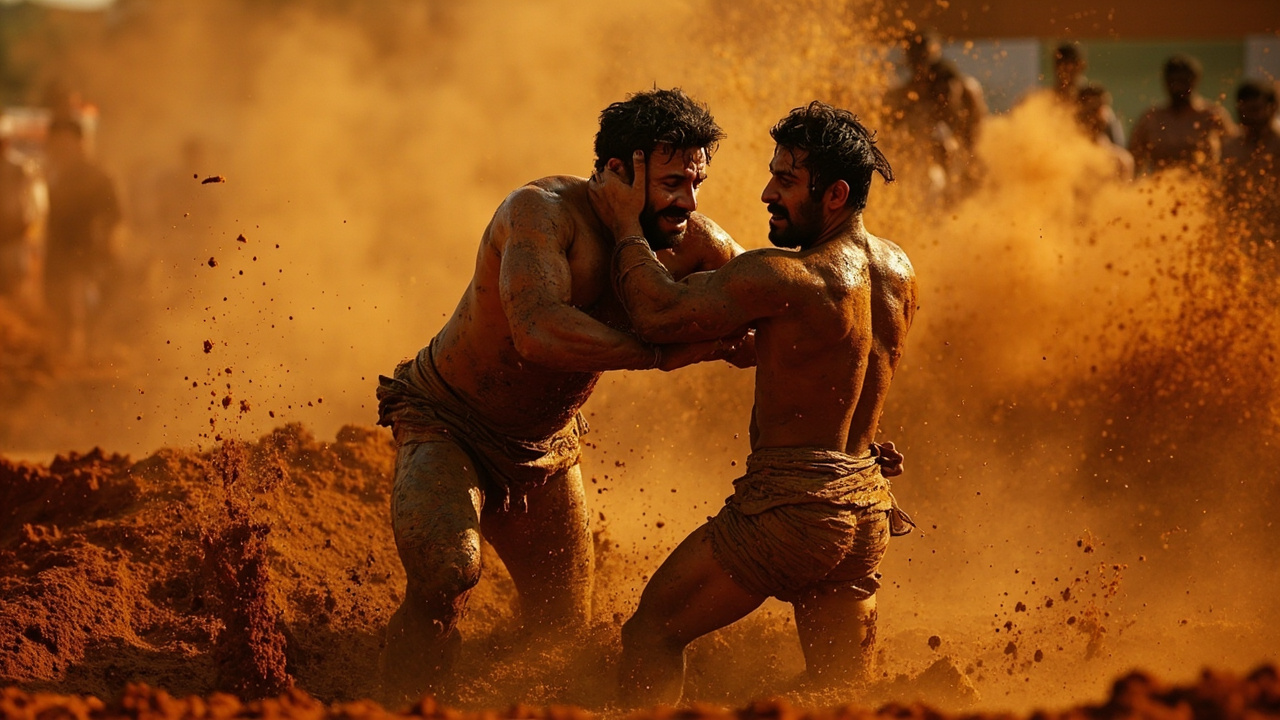
Kushti — mud wrestling — is more than sport. It is a spiritual discipline, a way of life, and the forge in which character is built. The akhara teaches the seven virtues that define a true Pehlwan.
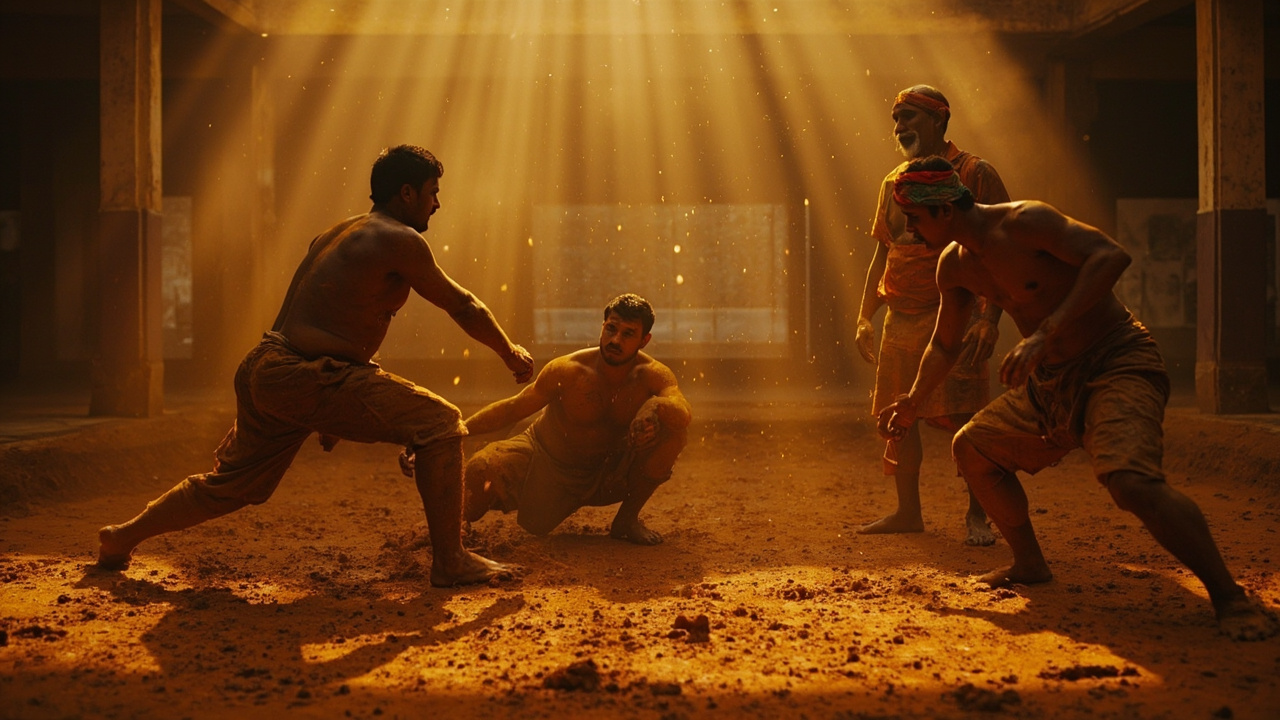
Kushti is the traditional form of wrestling practiced across North India, with Haryana as one of its strongest heartlands. Matches are fought in a pit of soft earth (khada), wrestlers coat their bodies in ghee and earth, and victory is determined by pinning the opponent's back to the ground.
The training begins in childhood. Boys as young as six enter the akhara under the guidance of a guru, learning not just wrestling techniques but the code of conduct that defines a Pehlwan. Discipline, respect for elders, rigorous routine, and the rejection of shortcuts — these are the foundations.
"Pehle aadmī, phir pehlwan" — First a human, then a wrestler.
The akhara is not merely a training ground — it is a school of life. A Pehlwan is measured not just by strength, but by character.
The foundation of the akhara. A Pehlwan follows strict daily routines — pre-dawn training, specific diet, rest schedules. Discipline is not optional; it is the air a Pehlwan breathes.
Physical courage in the pit and moral courage in life. A Pehlwan does not shrink from challenge. Neither in wrestling nor in the world does a true Pehlwan show fear.
A Pehlwan never forgets those who helped him. The guru who taught him, the companion who trained with him, the opponent who made him stronger — all are honored.
Strength is nothing without humility. A great wrestler who disrespects his opponent or neglects his family has failed the akhara's teaching.
A Pehlwan understands that mastery takes years. There are no shortcuts in the akhara. Every technique is mastered through repetition, and every opponent teaches something new.
The ability to master one's own body, temper, and desires. A Pehlwan who cannot control himself cannot claim to be a wrestler at all.
The seventh and highest virtue. A Pehlwan's word is his bond. Honor in the pit, honor in business, honor in the family — it is the single quality that defines a true Pehlwan.
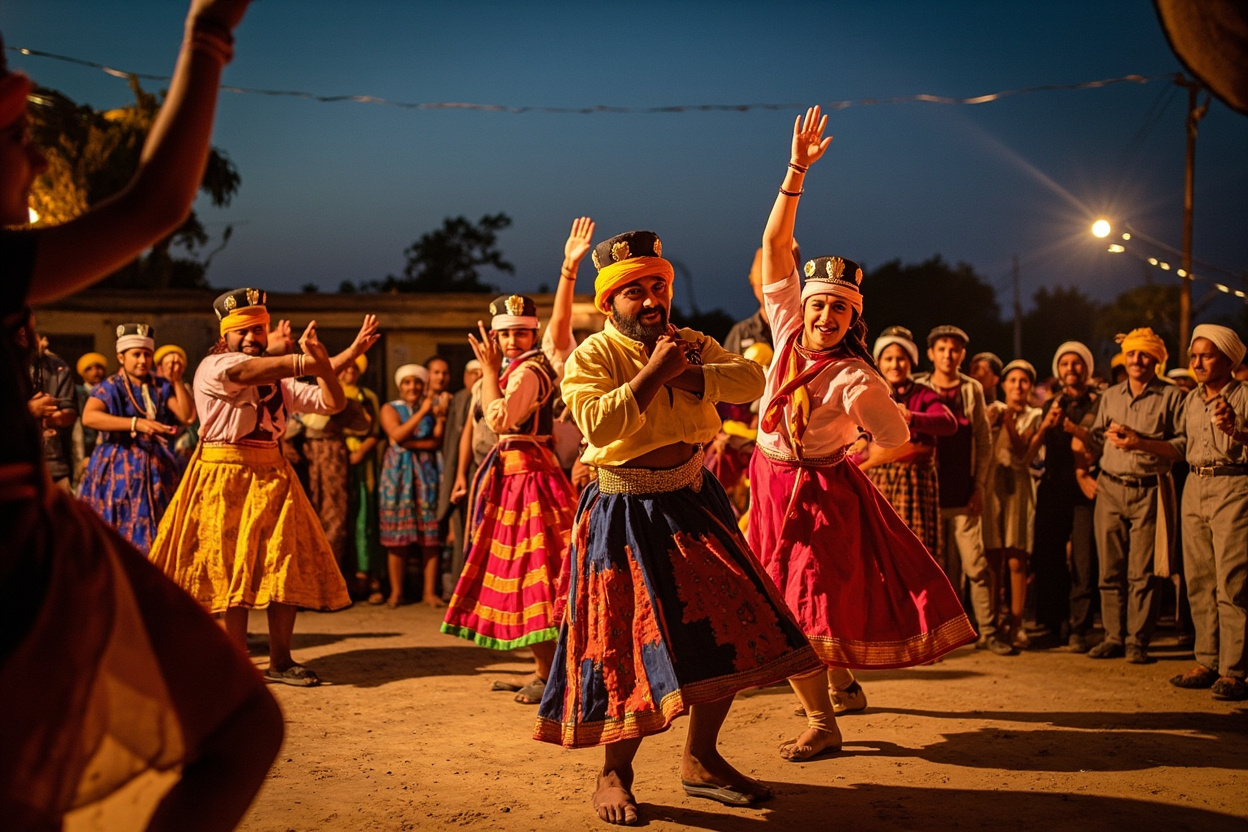
Far from Haryana, JAT communities across the United States and Canada have preserved the akhara tradition. Young men and women train in kushti, keeping the warrior spirit alive in the New World.
Every JAT cultural association in North America maintains an akhara. Training sessions happen on weekends, led by senior Pehlwans who have brought decades of experience from Haryana. Tournaments bring together wrestlers from across the continent.

Children as young as seven now train in kushti akharas across the US and Canada. What began as a way to preserve heritage has grown into a thriving youth movement — hundreds of young JATs learning the seven virtues through the ancient art.

The annual JAT Cultural Society Convention features kushti tournaments where wrestlers from different cities compete. These events draw large crowds and are among the most anticipated highlights of the convention calendar.
Whether you want to wrestle or simply witness the tradition, the next convention is the place to be.